- Request Vessel Network Review
- Trusted by Yacht Captains and Offshore Operators Worldwide
- Why Reliable Boat Satellite Internet Matters
- Marine Satellite Internet Technologies Available Today
- Offshore Boat Internet Is More Than a Satellite Antenna
- Choosing the Right Boat Satellite Internet Solution
- Real-World Examples
- Planning a Connectivity Upgrade?
- What Makes a Boat Satellite Internet Project Successful?
- Boat Satellite Internet: Common Mistakes to Avoid
- Request a Boat Satellite Internet Assessment
- FAQs: Boat Satellite Internet
- Related Articles:
If you’re operating a yacht offshore, reliable internet is no longer a luxury, it has become a critical part of vessel operations.
Running a smaller recreational boat or planning a DIY install? Start with our marine connectivity equipment and Starlink options in our online shop. [Link to relevant shop collections]
Whether you’re managing a private yacht in the Bahamas, supporting charter guests in the Caribbean, coordinating a crossing to the Mediterranean, or running business operations from sea, dependable connectivity directly impacts safety, efficiency, guest satisfaction, and crew morale.
Unfortunately, many captains discover the limitations of their internet systems only after leaving the dock. Coverage gaps, overloaded networks, poor Wi-Fi distribution, and equipment integration issues can quickly turn a connectivity investment into an ongoing frustration.
This guide explains how modern boat satellite internet systems work, what technologies are available today, and how larger yachts can build reliable connectivity solutions that perform both nearshore and offshore.
Request Vessel Network Review
Planning a connectivity upgrade or evaluating internet options for your yacht?
Schedule a 20–30 minute Vessel Network Review with a Marine Data Solutions specialist.
During the review, we’ll:
- Discuss your cruising regions and connectivity goals
- Evaluate your current onboard network
- Identify reliability gaps and bottlenecks
- Recommend the best satellite internet strategy for your vessel
If your project is a good fit, we’ll provide clear next-step recommendations for design, installation, and support.
Trusted by Yacht Captains and Offshore Operators Worldwide
Concord Marine Electronics and Marine Data Solutions have delivered more than 400 complex yacht and commercial vessel internet installations and 170 new-build electronics projects since 1988, with 24/7 support for captains, owners, and vessel managers operating across South Florida, the Bahamas, Caribbean, U.S. East Coast, and Mediterranean.
Why Reliable Boat Satellite Internet Matters
For vessels operating beyond cellular coverage, satellite connectivity often becomes the primary communication link.
The challenge is that internet requirements have changed dramatically over the last few years.
Today’s yacht owners, guests, captains, and crew expect:
- Video conferencing at sea
- Streaming entertainment
- Remote business operations
- Cloud-based vessel management
- Security camera access
- Real-time weather routing
- Remote technical support
- Crew communications with family
When internet performance fails, the impact extends far beyond inconvenience.
Common Risks of Poor Offshore Connectivity
Charter Guest Complaints
Guests increasingly expect the same connectivity offshore that they experience at home. Poor internet can negatively affect charter experiences and reviews.
Operational Delays
Captains rely on internet access for weather information, route planning, marina reservations, customs documentation, and communication with shore-based teams.
Crew Retention Challenges
Reliable internet has become a significant factor in crew welfare and retention.
Vendor Finger-Pointing
Many vessels add equipment over time without an overall network strategy, resulting in recurring issues where multiple vendors blame each other rather than solving the problem.
Marine Satellite Internet Technologies Available Today
Not all boat satellite internet solutions are the same.
Different technologies serve different operational requirements.
Starlink for Boats
Starlink has transformed marine connectivity by delivering higher bandwidth and lower latency than traditional satellite systems.
Benefits include:
- Fast download speeds
- Lower latency
- Global coverage expansion
- Easier deployment
- Lower hardware costs
However, Starlink should not automatically be considered the complete solution for every yacht.
Factors such as vessel size, cruising regions, redundancy requirements, and onboard network design still play a major role in overall performance.
Traditional VSAT Systems
VSAT remains important for many larger yachts and commercial vessels.
Advantages include:
- Proven offshore reliability
- Dedicated service options
- Predictable enterprise-level support
- Coverage in remote regions
For vessels operating globally or requiring mission-critical communications, VSAT often remains part of the connectivity strategy.
Hybrid Connectivity Systems
Many professional yacht installations now combine:
A marine router automatically selects the best available connection while providing seamless failover when coverage changes.
For many vessels in the 70–200 ft range, hybrid systems provide the best balance of performance and reliability.

Offshore Boat Internet Is More Than a Satellite Antenna
One of the biggest misconceptions in the marine industry is that installing a satellite antenna automatically creates a reliable internet experience onboard.
In reality, internet performance depends on the entire onboard network architecture.
A typical yacht connectivity system may include:
- Satellite antennas
- Marine routers
- Network switches
- Enterprise Wi-Fi access points
- Firewalls
- VLAN segmentation
- Remote monitoring tools
- Backup internet sources
Without proper integration, even the fastest satellite service can deliver poor results to users onboard.
Our core engineering and support team operates from Fort Lauderdale’s Safe Harbor Lauderdale Marine Center, supporting projects across the United States, Bahamas, Caribbean, and Mediterranean.
Common Performance Problems
- Weak Wi-Fi coverage
- Incorrect antenna placement
- Poor network design
- Inadequate failover configuration
- Overloaded guest networks
- Improper bandwidth management
Professional engineering focuses on the entire network ecosystem rather than a single device.

Choosing the Right Boat Satellite Internet Solution
Not every vessel requires the same connectivity strategy.
A yacht that spends most of its time cruising between South Florida and the Bahamas has very different requirements than an expedition yacht crossing the Atlantic or operating in remote regions.
When evaluating satellite internet solutions, consider:
Cruising Areas
Coverage varies between providers and service plans. Your primary operating regions should influence equipment and service selection.
Number of Users
Guest usage, crew devices, vessel systems, and business operations all compete for bandwidth.
Redundancy Requirements
Some vessels can tolerate occasional outages. Others require continuous connectivity for charter operations, remote management, or mission-critical communications.
Future Expansion
A network should support future technologies, additional users, and new onboard systems without requiring a complete redesign.
Support Expectations
When issues arise offshore, having access to experienced marine connectivity specialists can significantly reduce downtime.

Real-World Examples
92 ft Motor Yacht – Bahamas
Challenge:
Frequent guest complaints regarding unreliable internet during charter operations.
Result:
Hybrid Starlink and LTE solution with redesigned onboard Wi-Fi coverage, improving connectivity throughout guest areas.
118 ft Expedition Yacht – Caribbean and Mediterranean
Challenge:
Maintaining business communications while crossing between regions.
Result:
Hybrid satellite architecture with automated failover and remote monitoring capabilities.
145 ft Yacht Refit – Fort Lauderdale
Challenge:
Legacy network infrastructure could not support modern connectivity demands.
Result:
Complete network modernization supporting satellite internet, vessel systems, guest access, and future expansion.
Planning a Connectivity Upgrade?
Whether you’re evaluating Starlink, upgrading an aging VSAT system, or planning a complete network modernization, the first step is understanding what your vessel actually needs.
Schedule a brief conversation with a Marine Data Solutions specialist to discuss your vessel, cruising regions, and connectivity goals.
We’ll help you identify the most practical approach before you invest in equipment or installation work.
What Makes a Boat Satellite Internet Project Successful?
Many yacht owners begin their search by comparing hardware specifications and internet plans.
While equipment selection is important, long-term success typically comes from understanding how connectivity supports the vessel’s overall operation.
Successful projects often focus on outcomes such as:
- Reliable internet throughout guest and crew areas
- Consistent connectivity across multiple cruising regions
- Reduced downtime and troubleshooting
- Improved charter guest satisfaction
- Better support for remote work and business operations
- Easier management of onboard systems and devices
The goal is not simply to install satellite hardware. The goal is to create a connectivity environment that supports everyone onboard, whether the vessel is at the dock, cruising offshore, or crossing between regions.
Boat Satellite Internet: Common Mistakes to Avoid
Many connectivity issues are caused by planning mistakes rather than equipment failures.
Before investing in a new system, avoid these common pitfalls:
Choosing Equipment Before Defining Requirements
The “best” solution depends on your cruising plans, vessel layout, and internet usage patterns.
Ignoring Onboard Wi-Fi Performance
Even fast satellite service will feel slow if Wi-Fi coverage is poor throughout the vessel.
Relying on a Single Internet Source
Redundancy becomes increasingly important as vessels travel farther offshore.
Underestimating Crew and Guest Usage
Modern yachts often support dozens of connected devices simultaneously.
Focusing Only on Initial Cost
The lowest-cost installation may not provide the reliability, support, or scalability needed over time.
A well-planned connectivity strategy often delivers a better long-term return than simply purchasing the latest hardware.
Request a Boat Satellite Internet Assessment
If you’re responsible for internet performance on a yacht, sportfish, expedition vessel, or offshore operation, a professional assessment can help uncover limitations that may not be obvious until you’re underway.
During a 20–30 minute consultation, we’ll review your current setup, discuss your operational requirements, and identify opportunities to improve coverage, reliability, and user experience.
You’ll leave the call with practical guidance and a clearer understanding of which technologies make the most sense for your vessel and cruising plans.
FAQs: Boat Satellite Internet
⭐ What is the best boat satellite internet system today?
The answer depends on vessel size, cruising region, and operational requirements. Many larger yachts now use hybrid systems combining Starlink, VSAT, and cellular connectivity.
⭐ Does Starlink work offshore?
Yes. Starlink provides offshore coverage in many regions worldwide, although performance and availability vary by location and service plan.
⭐ Is satellite internet enough for a yacht?
The satellite service is only one part of the solution. Network design, Wi-Fi infrastructure, routers, and failover systems are equally important.
⭐ How much internet speed does a yacht need?
Requirements vary based on the number of users, streaming activity, business operations, and vessel systems connected to the network.
⭐ Should I choose Starlink or VSAT?
Many vessels benefit from using both. Starlink offers excellent bandwidth, while VSAT may provide additional reliability and coverage in specific operational scenarios.
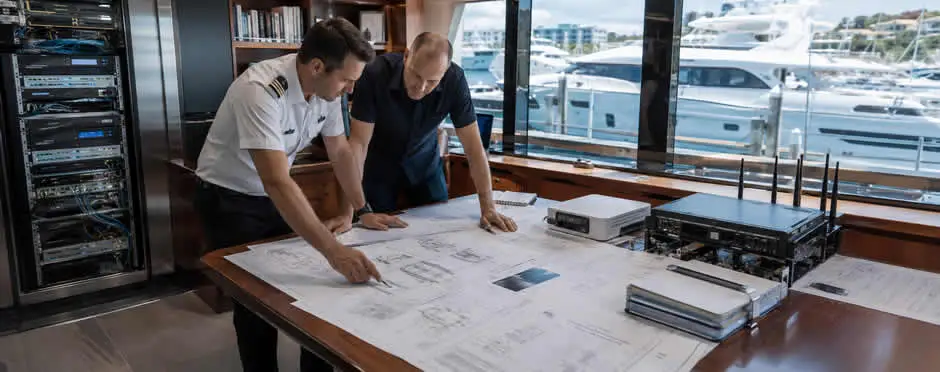
Complete Your Vessel Review Request
Complete the form below to schedule a 20–30 minute consultation with a Marine Data Solutions network specialist.
Vessel Information