
- Request a Vessel Connectivity Review
- How Starlink Is Changing Cruise Ship Connectivity
- What Cruise Ships Need From an Internet System
- Starlink Is the Connection, Not the Entire Network
- Integrating Starlink With Other Maritime Internet Connections
- Security and Network Management on Passenger Vessels
- Planning a Starlink Deployment on a Cruise Ship
- How Marine Data Solutions Can Help
- Request a Vessel Connectivity Review
- Make Your Cruise Ship Connectivity Plan More Deliberate
- Request a Vessel Connectivity Review
- Frequently Asked Questions
- Request a Vessel Connectivity Review
- Request a Vessel Connectivity Review
- Related Articles:
Cruise ship passengers expect to stay connected while traveling, whether they want to video call family, stream entertainment, share their trip, or work remotely. At the same time, cruise operators need dependable connectivity for crew communications, onboard business systems, equipment monitoring, and communication with shore-based teams.
Starlink on cruise ships offers another option for delivering high-speed satellite internet at sea. However, bringing satellite connectivity aboard a large passenger vessel involves more than installing an antenna. Cruise lines must consider passenger demand, network capacity, coverage, security, backup connectivity, and how internet service integrates with the ship’s existing IT infrastructure.
Request a Vessel Connectivity Review
Marine Data Solutions focuses on the vessel’s overall connectivity architecture, helping clients understand how satellite internet sources and onboard networking systems work together. For vessels with demanding connectivity requirements, that broader system design is an important part of evaluating a Starlink deployment.
How Starlink Is Changing Cruise Ship Connectivity
Traditional maritime internet systems have often involved compromises among available bandwidth, latency, operating cost, and geographic coverage. Low Earth orbit satellite networks such as Starlink introduce another option, with the potential for lower latency and higher bandwidth than some traditional satellite services.
Starlink’s maritime offering is designed for vessel use and supports integration with existing onboard networks. The company also highlights cruise guest connectivity and operational applications in its maritime materials. Actual performance depends on service plans, location, network conditions, equipment, and the vessel’s installation.
For cruise operators, the potential benefits extend beyond passengers browsing the internet. Improved connectivity can support crew communications, digital guest services, remote technical support, and data exchange between shipboard systems and shore-based teams.
The goal is not simply to add another internet connection. It is to deliver connectivity that supports the vessel’s operational needs and the experience passengers expect.
What Cruise Ships Need From an Internet System
Cruise ships present a very different networking challenge from a private yacht or a small commercial vessel. Hundreds or thousands of passengers and crew members may share the onboard network, and their usage patterns can change significantly throughout the day.
A suitable connectivity design should account for several priorities.
Passenger Wi-Fi Capacity
Passengers may browse websites, stream video, use messaging apps, attend video meetings, and access cruise-line applications at the same time. Peak demand can place considerable pressure on available satellite bandwidth.
Cruise operators need to evaluate the number of concurrent users, typical usage patterns, bandwidth allocation, and the onboard network’s ability to manage busy periods. A satellite service alone cannot guarantee a consistent experience if the internal network is poorly designed or capacity is insufficient.
Crew Connectivity
Crew members need to communicate with family, access approved online services, and use operational applications. Their requirements may differ from those of guests, making network segmentation and separate usage policies valuable.
A well-designed network can prioritize business-critical applications while managing recreational traffic according to the cruise line’s policies.
Operational Communications
Modern vessels exchange information with shore offices, technical teams, suppliers, and other operational partners. Connectivity may support remote diagnostics, software updates, reporting, and equipment monitoring.
These activities require thoughtful traffic management so that routine passenger demand does not unnecessarily interfere with important operational communications.
Coverage Across the Vessel
Internet service reaching a ship does not automatically mean every cabin, lounge, restaurant, crew area, and public deck has reliable Wi-Fi.
Access point placement, vessel construction materials, interference, cabling routes, and network capacity all affect the user experience. A cruise ship’s internal Wi-Fi system must be engineered separately from its satellite connection.
Starlink Is the Connection, Not the Entire Network

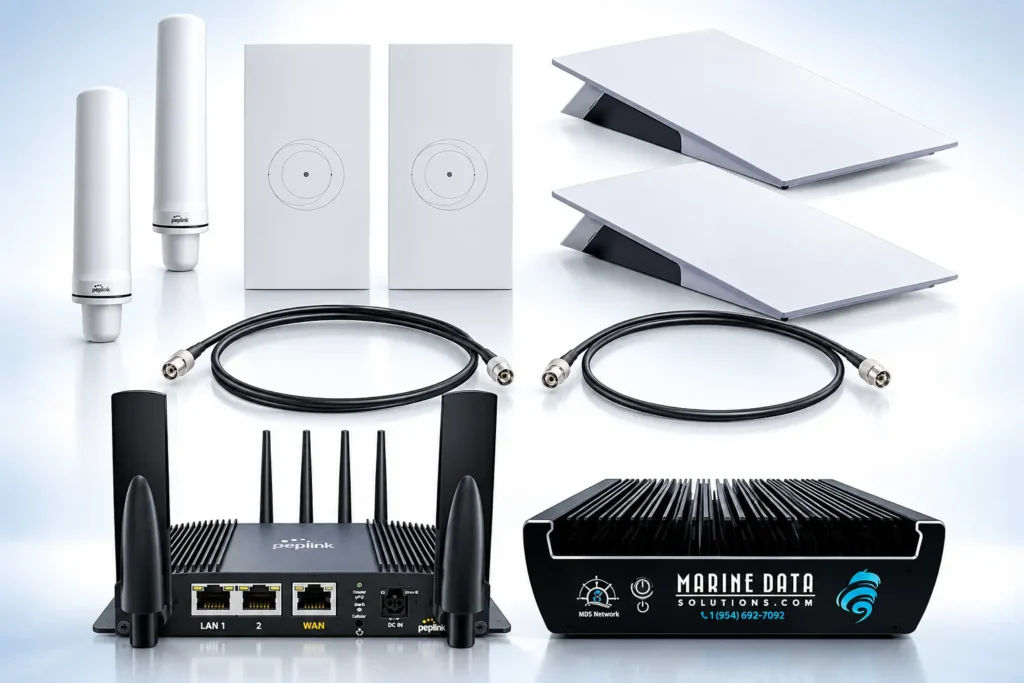
One of the most important considerations when evaluating Starlink on cruise ships is the distinction between the satellite connection and the network that distributes connectivity throughout the vessel.
Starlink can serve as an internet source, but the onboard architecture determines how that connection is shared, managed, secured, and combined with other available services.
A broader maritime network design may include:
- WAN routing: Directs traffic across available internet connections.
- Managed network switches: Connect and organize onboard network equipment.
- Wi-Fi access points: Deliver wireless coverage in passenger and crew spaces.
- Network segmentation: Separates guest, crew, administrative, and other approved network environments.
- Bandwidth management: Helps allocate capacity according to operational policies.
- Monitoring and diagnostics: Helps IT teams identify connection problems and network bottlenecks.
The appropriate design depends on the vessel’s existing infrastructure, scale, service expectations, and operating model. Large cruise ships may require a substantially different architecture from smaller passenger vessels or yachts.
Integrating Starlink With Other Maritime Internet Connections
A cruise line should evaluate satellite connectivity as part of its broader communications strategy rather than assuming a single service will meet every requirement on every route.
Depending on the vessel and its operating profile, the architecture may need to accommodate Starlink alongside other satellite services, cellular connectivity when near shore, or other approved backup connections.
A multi-WAN design can help a vessel manage more than one internet source. The routing strategy may be configured to distribute traffic, prioritize selected applications, or move traffic between connections according to defined rules and service availability.
The right approach depends on the cruise line’s requirements. Failover behavior, capacity, route coverage, service contracts, and compatibility must be assessed before deciding which connections should work together.
Importantly, adding multiple connections does not automatically provide uninterrupted service. The equipment, configuration, policies, and failure scenarios all need to be considered and tested.
Security and Network Management on Passenger Vessels

Cruise ship connectivity supports a large and diverse population of users. Passengers, crew, contractors, and vessel operations may all have different access requirements.
Network segmentation helps keep these environments logically separated. Access controls, secure configuration, monitoring, and appropriate bandwidth policies can further support a manageable onboard network.
IT teams should also consider how network changes are deployed, how problems are diagnosed remotely, and how service interruptions are communicated to onboard staff.
Starlink is one component of this wider system. Cruise operators should evaluate satellite-service security features alongside their own network architecture, access controls, monitoring practices, and operational requirements.
Connectivity design should complement the vessel’s established safety, security, and compliance procedures rather than replace them.
Planning a Starlink Deployment on a Cruise Ship

A successful project begins with the vessel’s requirements, not just a hardware selection.
1. Assess the Vessel and Its Routes
Review the ship’s operating areas, voyage patterns, existing connectivity systems, available mounting locations, and onboard network infrastructure. Service eligibility and performance expectations should be checked against the actual operating profile.
2. Define Passenger and Operational Requirements
Estimate concurrent passenger and crew usage, peak demand, operational application needs, and acceptable service levels. Identify which applications need priority and which can be managed through usage policies.
3. Review the Existing Network
Examine the WAN router, switches, Wi-Fi access points, network segmentation, monitoring tools, and any existing satellite or cellular services. This helps identify whether the current infrastructure can support the intended deployment.
4. Design the Connectivity Architecture
Determine how Starlink will connect to the vessel’s network, whether other internet sources will be integrated, and how routing, security, and traffic management should operate.
5. Validate and Test
After installation, test connectivity across representative onboard spaces and usage conditions. Validate routing behavior, coverage, network policies, monitoring, and the response to connection failures before treating the deployment as complete.
6. Plan for Ongoing Support
Satellite services, onboard equipment, and network requirements can change over time. Establish a process for monitoring performance, troubleshooting problems, updating configurations, and reassessing capacity as passenger expectations evolve.
How Marine Data Solutions Can Help
Choosing Starlink is only one part of a cruise ship’s connectivity decision. The vessel also needs an onboard network capable of distributing internet access effectively and managing the needs of different users.
Marine Data Solutions works on marine internet systems and onboard network engineering, including Starlink configuration, integration with other connectivity sources, network management, and vessel-specific system design.
For projects where MDS is a suitable fit, a vessel connectivity review can help clarify the existing architecture, identify potential limitations, and establish what should be evaluated before equipment or network changes are made.
Request a Vessel Connectivity Review
The first step is to understand the vessel, its routes, the people using the network, and the operational outcomes the connectivity system needs to support.
Make Your Cruise Ship Connectivity Plan More Deliberate
Starlink on cruise ships can be an important part of a modern maritime internet strategy, but the results depend on how the service fits into the wider onboard system.
Passenger Wi-Fi, crew connectivity, operational communications, coverage, security, and backup planning all deserve consideration. Evaluating these requirements together helps cruise operators make more informed decisions about capacity, architecture, and long-term support.
If you are reviewing satellite internet options or planning an upgrade to a vessel’s existing network, contact Marine Data Solutions to discuss your vessel’s connectivity requirements and determine whether a system review is appropriate.
Request a Vessel Connectivity Review
If you are reviewing satellite internet options or planning an upgrade to a vessel’s existing network, contact Marine Data Solutions to discuss your vessel’s connectivity requirements and determine whether a system review is appropriate.
Frequently Asked Questions
Can Starlink be used on cruise ships?
Starlink offers maritime connectivity and publicly describes cruise guest connectivity among its use cases. A specific deployment must be evaluated against the vessel’s operating areas, service eligibility, hardware requirements, network design, and expected demand.
Does Starlink provide Wi-Fi throughout a cruise ship?
Starlink provides the satellite internet connection; onboard Wi-Fi equipment distributes connectivity around the vessel. Coverage depends on the ship’s access points, network infrastructure, construction, and configuration.
Is Starlink enough for a large cruise ship?
That depends on the ship’s passenger count, usage patterns, operational requirements, and service plan. Cruise operators should assess total capacity and determine whether additional connections, traffic management, or other network resources are needed.
Can Starlink work with an existing shipboard network?
Starlink’s maritime service supports integration with existing onboard networks. Compatibility and the implementation approach should be checked against the vessel’s current routers, switches, security policies, and other internet connections.
Can cruise ships combine Starlink with other internet services?
Potentially, yes. A properly designed multi-WAN system can manage multiple internet sources, subject to hardware compatibility, service availability, and the chosen routing configuration. The design should define how traffic is prioritized and how connection failures are handled.

What should cruise operators evaluate before installing Starlink?
Start with operating routes, service eligibility, bandwidth demand, antenna placement, onboard Wi-Fi coverage, network security, backup connectivity, and ongoing support. A vessel-specific assessment can help identify requirements before a deployment begins.
Request a Vessel Connectivity Review
Complete the form below to schedule a 20–30 minute consultation with a Marine Data Solutions yacht internet and network specialist.
This review is best suited for professionally managed 70–200+ ft yachts planning a refit, new build, or significant network upgrade.
Vessel Information