
- What Is Included in a WiFi for Boats System Package?
- Planning a WiFi system package for a 70–200+ ft yacht?
- Running a smaller boat or planning a DIY installation?
- Planning a WiFi package for a large yacht?
- Why Choosing a Complete Boat WiFi System Matters
- Internet Sources for a Boat WiFi Package
- Need help deciding which internet sources belong in your package?
- WiFi Equipment and Coverage Throughout the Yacht
- Choosing a Package for Coastal and Offshore Cruising
- If your yacht runs regular trips between South Florida, the Bahamas, Caribbean, or Mediterranean
- Network Security, Guest WiFi, and Crew Connectivity
- How to Choose the Right Boat WiFi System Package
- How Marine Data Solutions Plans Yacht Connectivity
- Planning a new build, refit, or major WiFi upgrade?
- What a Professional Boat WiFi Package Review Should Evaluate
- WiFi Packages for Smaller Boats and DIY Projects
- For professionally managed 70–200+ ft yachts
- Frequently Asked Questions About WiFi for Boats System Packages
- Request a Vessel Communications Review
- Related Articles
This guide is written for professionally managed 70–200+ ft private and charter yachts with full‑time captains, engineers, yacht managers, and owner representatives planning refits, new builds, or significant connectivity upgrades.
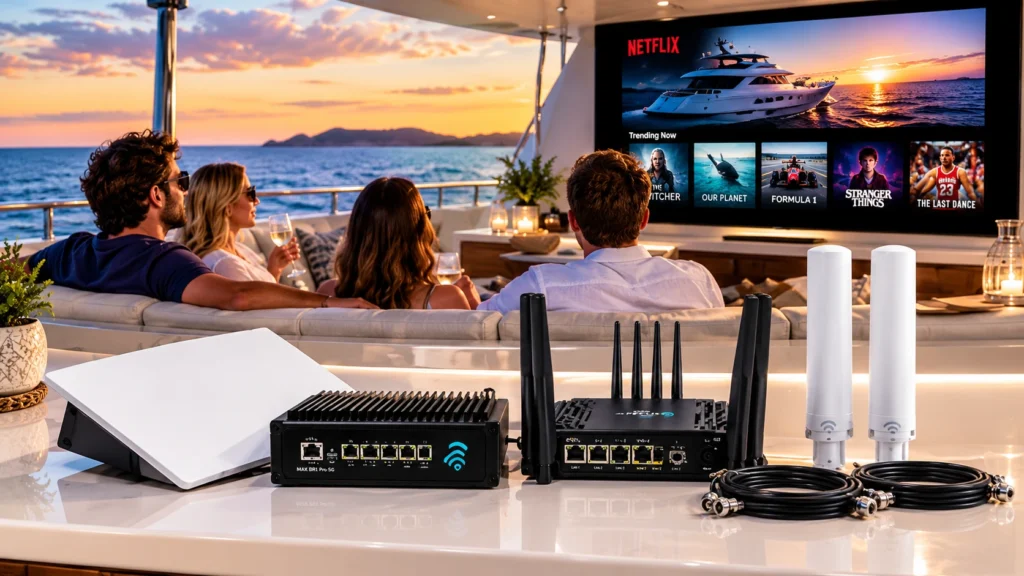
What Is Included in a WiFi for Boats System Package?
If you manage a 70–200+ ft private or charter yacht, choosing a WiFi for boats system package requires understanding what the system actually needs to accomplish.
Planning a WiFi system package for a 70–200+ ft yacht?
Communications Review can define what the network needs to do before you commit to equipment or bundles.
Marine Data Solutions has delivered complex yacht and commercial vessel internet and communications installations on professionally managed 70–200+ ft yachts since 2016.
Our team is based in Fort Lauderdale and supports vessels operating across the United States, Bahamas, Caribbean, and Mediterranean.
Running a smaller boat or planning a DIY installation?
Start with equipment options in the Marine Data Solutions shop.
A complete onboard connectivity solution may involve internet equipment, network hardware, wireless access points, cabling, configuration, installation, and ongoing service plans. The exact components depend on the vessel’s size, cruising profile, onboard systems, and connectivity requirements.
A package intended for a small recreational boat may focus on a router and a way to access cellular or other available internet. A professionally engineered yacht network may require a much broader architecture to support multiple decks, guest cabins, crew spaces, entertainment systems, and operational equipment.
Before selecting a package, establish whether you need:
- An onboard WiFi network
- An external internet connection
- Satellite or cellular connectivity
- Wireless coverage across multiple decks
- Separate guest and crew networks
- Connectivity for entertainment and operational systems
- Installation and configuration
- Ongoing technical support
These requirements determine whether a standard equipment bundle is appropriate or whether the project needs a vessel-specific network design.
Planning a WiFi package for a large yacht?
A review can help define the equipment, connectivity, and installation requirements before you commit to a package.
Why Choosing a Complete Boat WiFi System Matters
A boat WiFi package should be evaluated as a system rather than a collection of individual products.
A router may manage internet connections, but it does not necessarily provide sufficient wireless coverage throughout a large vessel. An access point can extend WiFi coverage, but it cannot independently provide internet service when no suitable WAN connection is available.
For professionally managed yachts, these components need to work together.
Consider a charter yacht operating between Fort Lauderdale and the Bahamas. Guests may expect reliable streaming and video calls while crew members need connectivity for communications, administration, and vessel operations.
A private yacht cruising the Caribbean and Mediterranean may have different requirements for offshore internet, remote work, service availability, and network resilience.
The appropriate package should reflect the vessel’s operating environment and the people and systems that depend on connectivity.
Internet Connectivity and WiFi Are Different
The internet connection brings external connectivity to the vessel. The onboard network distributes that connection to authorized devices.
A boat may use satellite internet, cellular connectivity, marina internet, or a combination of sources. Its router and network infrastructure manage those connections, while wireless access points provide WiFi coverage.
A package that includes wireless equipment but excludes internet service should not be confused with a complete internet subscription. Likewise, a satellite terminal alone does not guarantee reliable WiFi throughout the yacht.
Complete Packages Need Clear Inclusions
Before purchasing a package, determine whether it includes:
- Internet hardware
- Router and network equipment
- WiFi access points
- Antennas, cabling, and mounting components
- Configuration and installation
- Internet service or subscription
- Network security configuration
- Technical support and maintenance
Not every package includes every item. Confirming the scope helps prevent unexpected costs and compatibility problems.
Internet Sources for a Boat WiFi Package
The best WiFi for boats system package depends partly on how the vessel will connect to the internet.
Satellite Internet
Satellite connectivity can provide internet access when the vessel operates beyond practical cellular coverage, subject to the service’s coverage and operating requirements.
For yachts that cruise offshore or across multiple regions, satellite internet may be a key part of the connectivity architecture.
When evaluating satellite equipment, consider coverage, equipment requirements, service eligibility, recurring costs, data policies, and installation constraints.
Cellular Internet
Cellular connectivity can be useful in marinas and coastal areas where compatible service is available.
Depending on the vessel’s location, carrier, equipment, and plan, cellular internet may provide a primary connection in coastal waters or complement satellite connectivity.
Coverage should not be assumed offshore, and the system should be designed around the yacht’s actual cruising routes.
Marina and Shore-Based Internet
A marina’s internet connection may provide another source when the yacht is docked. However, service quality, availability, and access requirements vary.
A suitable network may be configured to use shore-based internet when available, subject to the equipment and network configuration.
Multiple Internet Sources
Some yacht connectivity systems combine multiple WAN connections. Depending on the hardware and configuration, the network may support failover, traffic distribution, or connection prioritization.
These capabilities are not identical. Confirm which functions are supported and how the system behaves when a connection becomes unavailable.
Need help deciding which internet sources belong in your package?
WiFi Equipment and Coverage Throughout the Yacht
A boat WiFi system package must account for the physical layout of the vessel.
On larger yachts, wireless signals can be affected by multiple decks, metal structures, bulkheads, tinted glass, cabinetry, and technical spaces. A single access point is unlikely to be the right solution for every vessel.
Routers and Network Gateways
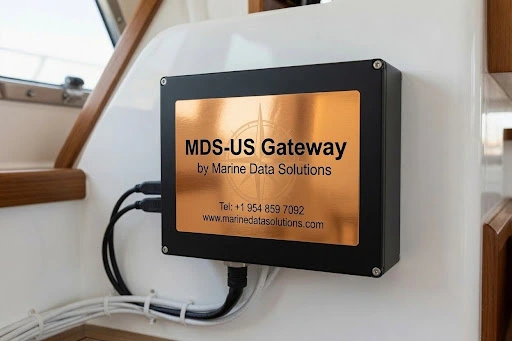
The router or gateway manages traffic between the onboard network and the available internet connections. Depending on the selected equipment, it may also support firewall functions, WAN management, network segmentation, and bandwidth policies.
Wireless Access Points
Access points distribute WiFi throughout the yacht. Their number and placement depend on vessel dimensions, deck layout, construction, the required coverage areas, and the expected number of connected devices.
A professional design prioritizes appropriate coverage across cabins, salons, exterior decks, crew spaces, and other relevant areas.
Switching and Cabling
Larger installations may require network switches, structured cabling, and suitable power delivery to connect access points and other network devices.
Outdoor Coverage
Exterior spaces may include aft decks, flybridges, beach clubs, and other guest areas. Equipment selection and placement should account for environmental exposure and the vessel’s structure.
Equipment Compatibility
The components in a WiFi package need to work together. Router capabilities, access-point compatibility, switching, cabling, power requirements, and network management should be considered as part of the complete system.
Choosing a Package for Coastal and Offshore Cruising
The right WiFi package depends on where the yacht operates and how it uses connectivity.
Coastal Cruising
For yachts operating near shore, cellular connectivity may be useful where compatible coverage is available. Satellite internet can provide another option when the vessel moves beyond terrestrial coverage.
Marina and Dockside Use
When a yacht is docked, marina internet may provide an additional connection. The availability and quality of this service can vary between locations, so it should be considered as one possible source rather than a guaranteed connection.
Bahamas and Caribbean Cruising
Yachts operating between South Florida, the Bahamas, and the Caribbean may move between areas with different cellular coverage and internet availability. A connectivity plan should consider the vessel’s actual routes and the available services in those areas.
Offshore Passages
Offshore operations require connectivity options that do not depend on terrestrial cellular coverage. Satellite services may be an important part of the system, subject to coverage, equipment, service eligibility, and operating requirements.
Mediterranean and International Operations
Yachts operating across international regions should consider service availability, plan eligibility, equipment requirements, and the differences between local connectivity options. The package should reflect the vessel’s intended operating areas rather than assume that one service will be suitable everywhere.
If your yacht runs regular trips between South Florida, the Bahamas, Caribbean, or Mediterranean
a Vessel Communications Review can map your routes against satellite, cellular, and marina options and translate that into a practical system design.
Network Security, Guest WiFi, and Crew Connectivity
A professionally designed yacht WiFi system should account for the different users and devices connected to the network.
Guest Networks
Guest WiFi should provide convenient access while limiting unnecessary access to other network resources. Guest devices should not automatically be able to access crew systems, network-management interfaces, or operational equipment.
Crew Networks
Crew members may need access to communications platforms, administrative applications, weather information, maintenance systems, and other work-related services. These requirements should be considered separately from guest connectivity.
Network Segmentation
Network segmentation can separate guest, crew, administrative, AV, security, and operational devices. VLANs may be used to organize traffic and control which devices or groups can communicate with one another.
Bandwidth Management
A large yacht may have many users and devices connected at the same time. Streaming, video calls, entertainment systems, and operational applications can all compete for available bandwidth.
Traffic management and prioritization can help distribute available capacity according to the vessel’s requirements.
Remote Management and Support
Remote management capabilities can help technical teams monitor and troubleshoot network equipment, subject to the system configuration and available connectivity. This can be useful when a vessel operates across different regions or is away from its usual service location.
How to Choose the Right Boat WiFi System Package
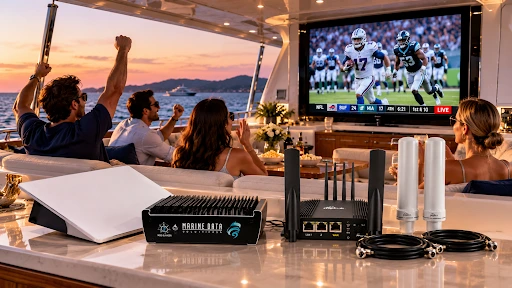
Choosing a package requires more than comparing product specifications or advertised speeds. The system should match the vessel’s actual requirements.
1. Define the Vessel’s Connectivity Needs
Identify the number of users, connected devices, onboard applications, and areas that require coverage. Consider the needs of guests, crew, entertainment systems, and operational equipment.
2. Establish Internet Requirements
Review the yacht’s cruising regions and determine which internet sources are appropriate. Satellite, cellular, and marina connections may serve different purposes depending on the vessel’s routes.
3. Define Coverage Areas
Identify guest cabins, salons, crew spaces, bridge areas, exterior decks, and other spaces that require WiFi. Coverage planning should account for the vessel’s construction and layout.
4. Evaluate the Network Architecture
Check whether the package includes the necessary router, access points, switching, cabling, security features, and network management capabilities.
5. Confirm Installation Requirements
Determine whether mounting, wiring, configuration, commissioning, and integration are included or priced separately.
6. Compare Total Ownership Costs
Consider equipment, installation, subscriptions, data plans, maintenance, and future upgrades. A lower initial price does not necessarily mean a lower total project cost.
7. Plan for Future Expansion
The network may need to accommodate additional devices, upgraded entertainment systems, new internet sources, or changing cruising requirements. Allowing for expansion can help avoid unnecessary replacement later.
For a professionally managed 70–200+ ft yacht, a vessel-specific design may be more appropriate than selecting a package based on a generic equipment list.
How Marine Data Solutions Plans Yacht Connectivity
A professional connectivity project should begin with the yacht and its operating requirements, not simply with a package name.
1. Vessel and Route Review
Marine Data Solutions starts by understanding the yacht’s size, mission, cruising regions, onboard systems, current internet sources, and upcoming refit or yard window.
2. Network Design and Engineering
The requirements are translated into a network architecture that considers routers, access points, switching, network segmentation, internet connections, and bandwidth management.
Where appropriate, design documentation can help define the installation before work begins.
3. Equipment Selection and Integration
Equipment is selected according to the required functionality, vessel layout, compatibility, and project scope. Integration requirements depend on the yacht’s existing communications, AV, and network infrastructure.
4. Yard or Dockside Installation
Installation can be coordinated with the vessel’s project schedule and location, subject to the agreed scope of work.
5. Testing and Crew Handover
The completed network should be tested across relevant areas of the vessel. Documentation and crew handover help onboard personnel understand the system and its basic operating procedures.
6. Ongoing Support
As cruising patterns, service plans, onboard technology, and crew requirements change, the network may need updates or maintenance.
An appropriate support arrangement can help keep the system aligned with the vessel’s operational needs.
Planning a new build, refit, or major WiFi upgrade?
What a Professional Boat WiFi Package Review Should Evaluate
A vessel-specific review should look beyond the advertised components in a package.
Key areas can include:
- Vessel dimensions and layout
- Guest and crew coverage requirements
- Existing network topology
- Satellite and cellular internet requirements
- Marina internet access
- Router, firewall, and switching capabilities
- Access-point locations and quantities
- Network segmentation and security
- Bandwidth and traffic management
- Installation and integration requirements
- Future expansion and ongoing support
This process helps establish whether a standard package is sufficient or whether the vessel needs a customized equipment and installation plan.
WiFi Packages for Smaller Boats and DIY Projects
Not every boat needs a professionally engineered yacht network.
Smaller vessels may need a simpler arrangement for coastal connectivity, occasional marina use, or limited onboard internet access. The right setup depends on the operating area, the number of users, the equipment already installed, and the intended budget.
Owners considering DIY equipment should confirm the package’s actual inclusions, compatibility, installation requirements, and any recurring service costs.
For smaller boats and DIY projects, explore available options through the Marine Data Solutions shop.
For professionally managed 70–200+ ft yachts, complex refits, new builds, or major network upgrades, a vessel review can help determine the appropriate system architecture before equipment is purchased.

For professionally managed 70–200+ ft yachts
The right WiFi system package usually starts with a vessel‑specific plan, not a generic box of hardware. A Vessel Communications Review helps align packages with real‑world operations.
Frequently Asked Questions About WiFi for Boats System Packages
What is included in a WiFi for boats system package?
Depending on the offering, a package may include a router, wireless access points, antennas, cabling, network equipment, or installation. Internet service and ongoing subscriptions may be separate. Confirm the exact inclusions, compatibility, and installation scope before purchasing.
What is the best WiFi package for a yacht?
The best package depends on vessel size, cruising regions, coverage requirements, number of users, available internet sources, and onboard systems. A professionally managed yacht may require a customized network design rather than a standard bundle.
Does a boat WiFi package include internet service?
Not necessarily. Some packages contain only networking equipment, while others may include specific connectivity hardware or services. Confirm whether internet subscriptions, data plans, installation, and ongoing support are included.
Can a boat WiFi system package include satellite internet?
It may, depending on the package and service provider. Confirm the satellite equipment, service eligibility, coverage, plan terms, and whether the package includes the subscription or only the hardware.
Is cellular internet enough for a boat WiFi system?
Cellular internet may be suitable in areas with compatible coverage. Vessels operating offshore or across regions with limited terrestrial coverage may need additional connectivity options, such as satellite internet.
How do I get WiFi throughout a large yacht?
Coverage depends on access-point placement, network equipment, vessel construction, deck layout, and user demand. Larger yachts may require multiple strategically positioned access points supported by appropriate cabling and switching.
Can a boat WiFi package support guests and crew separately?
Yes, when the equipment and configuration support appropriate network segmentation. Separate guest and crew networks can help organize traffic and restrict unnecessary access between device groups.
How much does a WiFi system package for a boat cost?
The total cost depends on the equipment, internet service, installation complexity, vessel size, network architecture, and ongoing service charges. A project-specific estimate should distinguish hardware, installation, subscriptions, and support costs.
Request a Vessel Communications Review
If you manage a 70–200+ ft yacht and are planning a WiFi system package, new build, refit, or major connectivity upgrade, a vessel-specific review can help establish what the system needs to accomplish before equipment is selected.
Tell the Marine Data Solutions team your vessel length, cruising region, role, mission, current connectivity setup, and desired work window.
The team can review the initial requirements and discuss the appropriate next steps for network design, equipment, installation, or support.
What Happens Next
- Submit your vessel and project information.
- The Marine Data Solutions team reviews the initial requirements.
- A planning conversation is scheduled to discuss the yacht and project.
- The team identifies the appropriate next steps for design, equipment, installation, or support.