
- Request a Vessel Network Review
- Why Boat WiFi Becomes More Complicated on Large Yachts
- Boat WiFi vs. Internet: Why They Are Not the Same Thing
- Yacht WiFi Systems Should Be Designed Around the Vessel
- Marine WiFi Network Design for Reliable Coverage
- When Your Boat WiFi Problem Is Actually a Network Problem
- Yacht Internet Requires More Than a Single Connection
- Planning a Refit or Yard Period?
- How We Work With Your Yacht
- What a Professionally Designed Boat WiFi System Can Improve
- Build the Network Around Your Yacht
- FAQs About Boat WiFi
- Related Articles:
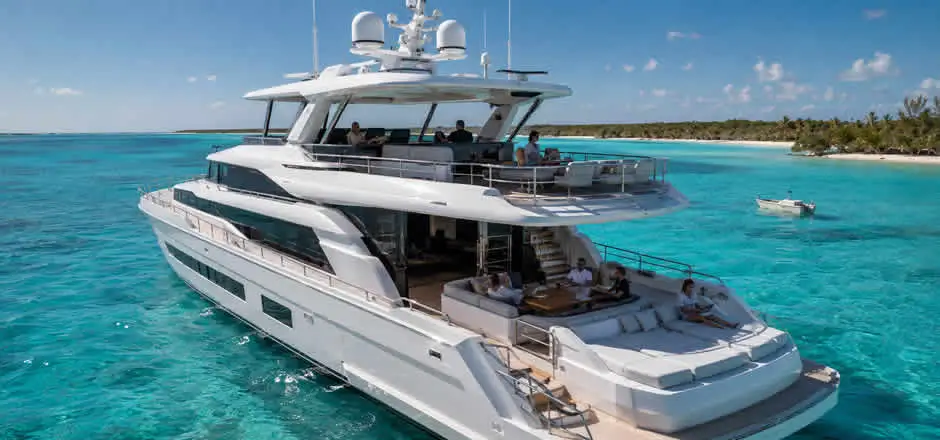
Reliable boat WiFi on a 70–200 ft yacht requires much more than installing a wireless router and connecting it to Starlink.
A modern yacht may have dozens—or even hundreds—of connected devices competing for bandwidth across multiple decks, cabins, crew areas, technical spaces, and exterior zones. At the same time, the vessel may switch between Starlink, cellular, marina WiFi, or satellite connectivity as cruising conditions change.
For captains and owners, the real challenge is making all of those connections operate as one reliable onboard network.
A properly engineered boat WiFi system can provide dependable connectivity for owners conducting business onboard, charter guests streaming entertainment, crew communicating with family, and vessel systems exchanging operational data.
For yachts operating throughout South Florida, the Bahamas, Caribbean, Mediterranean, and other cruising regions, Marine Data Solutions designs professional onboard networks around the vessel’s layout, connectivity requirements, cruising profile, and operational priorities.
Concord Marine Electronics and Marine Data Solutions have delivered more than 427 complex yacht and commercial vessel internet installations and over 170 new-build electronics projects since 1988, with 24/7 support for captains and crews.
Our core engineering and support team operates from Fort Lauderdale’s Safe Harbor Lauderdale Marine Center, supporting projects across the United States, Bahamas, Caribbean, and Mediterranean.
Running a smaller boat or planning a DIY installation? Explore equipment and smaller-vessel solutions through the Marine Data Solutions online shop.
Request a Vessel Network Review
Request a Vessel Network Review
If your 70+ ft yacht has inconsistent WiFi coverage, recurring connectivity complaints, or an aging onboard network, the first step should be understanding where the problem actually originates.
A Vessel Network Review gives the MDS team an opportunity to discuss your vessel, cruising profile, current equipment, and the areas where connectivity is falling short.
From there, we can determine whether your project requires WiFi optimization, network modernization, internet-source integration, or a broader connectivity redesign.
Best suited for: captains, owners, engineers, and yacht managers planning a professional network project on a 70–200 ft vessel.
Why Boat WiFi Becomes More Complicated on Large Yachts
On a smaller recreational boat, a single router or access point may provide acceptable coverage.
A 70–200 ft yacht presents a very different networking environment.
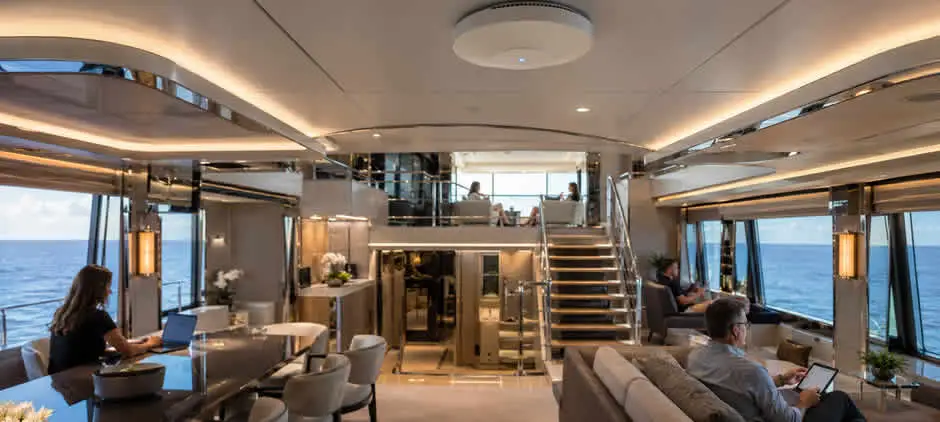
Multiple decks, machinery spaces, bulkheads, equipment rooms, guest cabins, crew quarters, flybridges, and exterior entertainment areas can all affect wireless coverage.
At the same time, the number of connected systems continues to grow.
A yacht’s network may need to support:
- Smartphones and tablets
- Guest laptops
- Smart televisions
- Streaming systems
- Crew devices
- Navigation equipment
- CCTV systems
- VoIP communications
- Vessel monitoring
- Automation systems
- Remote technical support
- Owner business applications
- Cloud-based services
When these systems depend on poorly planned network infrastructure, problems can quickly become visible to everyone onboard.
Guests may complain that WiFi disappears inside their cabins. Crew members may struggle with unreliable connections below deck. Streaming may buffer during a charter. Owners may lose connectivity during an important video conference.
For the captain or engineer, these problems can become particularly frustrating when multiple vendors are involved.
The internet provider may say the connection is working.
The WiFi vendor may blame the satellite service.
The electronics installer may blame the network.
Meanwhile, the yacht still does not have reliable connectivity.
Professional boat WiFi design addresses the entire connectivity path, rather than treating each device as an isolated component.
Boat WiFi vs. Internet: Why They Are Not the Same Thing
One of the most important distinctions when troubleshooting yacht connectivity is the difference between internet service and onboard WiFi.
Internet services bring connectivity to the vessel.
These may include:
| Internet Source | Typical Role |
|---|---|
| Starlink | High-bandwidth satellite connectivity |
| 4G/5G Cellular | Coastal and near-shore connectivity |
| VSAT | Offshore satellite connectivity and redundancy |
| Marina WiFi | Connectivity while docked |
Boat WiFi distributes that connectivity throughout the vessel.
This distinction matters because upgrading the internet source does not automatically solve onboard coverage problems.
A yacht could have excellent Starlink performance at the antenna while guests still experience poor WiFi inside cabins.
Conversely, the yacht could have professionally designed wireless coverage throughout the vessel while the offshore internet connection itself is slow or unavailable.
Reliable yacht connectivity requires both sides of the equation to work together:
Internet Sources → Network Infrastructure → WiFi Access Points → Connected Devices
That is why large-yacht connectivity projects should be evaluated as complete network systems.
Yacht WiFi Systems Should Be Designed Around the Vessel
There is no universal WiFi configuration that works equally well on every yacht.
The correct architecture depends on the vessel itself.
A 75 ft private motor yacht cruising primarily between Fort Lauderdale and the Bahamas may have very different requirements from a 160 ft charter yacht operating seasonally between the Caribbean and Mediterranean.
Before specifying equipment, several factors should be evaluated.
Vessel Layout
Deck count, construction materials, machinery spaces, technical compartments, and cabin layouts can affect wireless signal propagation.
Number of Users and Devices
A private yacht carrying an owner and small crew may have significantly different bandwidth requirements from a charter yacht supporting guests, crew, televisions, cameras, automation, and dozens of personal devices.
Cruising Region
Internet availability changes dramatically depending on whether the yacht is docked in South Florida, crossing to the Bahamas, cruising the Caribbean, or operating farther offshore.
Operational Priorities
Guest entertainment, business connectivity, crew welfare, navigation, remote monitoring, and vessel management may require different levels of network priority.
Redundancy Requirements
For vessels where connectivity is operationally important, relying on one internet source can create an unnecessary single point of failure.
The objective is therefore not simply to install more WiFi access points.
It is to build a network architecture appropriate for how the yacht actually operates.
Marine WiFi Network Design for Reliable Coverage
A professional marine WiFi network starts with understanding where connectivity is required and what systems depend on it.
Depending on vessel size and configuration, this may include coverage across:
- Owner and guest cabins
- Main salon
- Dining areas
- Bridge and pilothouse
- Crew quarters
- Crew mess
- Engine and technical spaces
- Flybridge
- Aft deck
- Beach club
- Tender garage
- Exterior entertainment areas
Simply adding access points wherever coverage appears weak can create additional problems, including interference and poor roaming behavior.
Instead, access-point placement should be considered as part of the overall network architecture.
Professional network design can also separate different types of traffic.
For example, guest devices should not necessarily operate on the same network segment as vessel management, security, or technical systems.
Depending on the yacht, networks may be segmented for:
- Owners
- Guests
- Crew
- Vessel operations
- AV systems
- CCTV/security
- IoT and monitoring systems
This can improve security, troubleshooting, traffic management, and overall network performance.
When Your Boat WiFi Problem Is Actually a Network Problem
A common mistake is assuming that poor onboard connectivity means the yacht needs faster internet.
Sometimes it does.
But many performance problems occur after the internet connection reaches the vessel.
Typical warning signs include:
- Strong internet speed near the router but poor performance elsewhere
- WiFi dropping when moving between decks
- Dead zones inside cabins
- Streaming problems despite adequate internet bandwidth
- Certain areas becoming slow when many guests connect
- Crew repeatedly rebooting network equipment
- Different systems competing for bandwidth
- Unclear or undocumented network configurations
In these situations, replacing Starlink or upgrading the satellite plan may not address the underlying issue.
The yacht may instead need improvements to its switches, cabling, access points, VLAN configuration, routing, bandwidth management, or overall network architecture.
Identifying the actual bottleneck before replacing equipment can prevent unnecessary upgrades and reduce troubleshooting time.
Yacht Internet Requires More Than a Single Connection
Modern yacht internet systems increasingly combine multiple connectivity sources.
Rather than expecting one service to perform optimally everywhere, an engineered system can use different connections according to availability, location, performance, and operational requirements.
For example, a yacht might use:
Starlink + 5G/LTE + Marina WiFi + VSAT
The appropriate combination depends on cruising patterns and the vessel’s requirements.
Near shore, cellular connectivity may provide useful performance.
At the dock, marina WiFi may be available.
Offshore, satellite connectivity becomes increasingly important. Vessels requiring additional offshore connectivity options may also benefit from a properly planned Boat Satellite Internet strategy.
On vessels with higher availability requirements, multiple sources can also provide redundancy when one service becomes unavailable or degraded.
The onboard network then becomes responsible for distributing and managing those connections throughout the yacht.
This is why the quality of the internal network remains critical even when premium satellite services are installed.
For larger vessels with more demanding connectivity requirements, the architecture may form part of a broader Superyacht Internet strategy integrating multiple WAN sources with professionally managed onboard infrastructure.
Planning a Refit or Yard Period?
A scheduled yard period is often one of the best opportunities to correct network infrastructure that has accumulated through years of equipment additions and temporary upgrades.
Instead of waiting until the vessel returns to service, MDS can review the connectivity requirements before the work window begins, helping determine what network changes should be incorporated into the project.
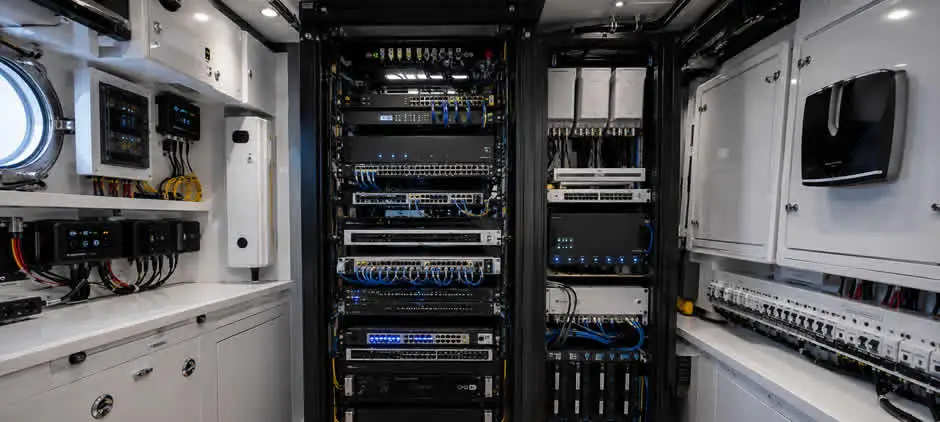
That may include cabling, equipment locations, access-point changes, rack improvements, Starlink or cellular integration, and network modernization.
Early planning can also make coordination with shipyards and other onboard trades considerably easier.
How We Work With Your Yacht
Professional boat WiFi projects should begin with requirements—not equipment.
1. Vessel and Route Review
We start by reviewing the yacht’s size, layout, cruising regions, current connectivity sources, number of users, and operational requirements.
We also identify existing problems such as dead zones, unstable connections, insufficient bandwidth, outdated hardware, or poor network segmentation.
2. Network Assessment and System Design
The existing network infrastructure is evaluated to determine what can remain and what should be upgraded.
The proposed design can address access-point placement, switching, routing, cabling, network segmentation, internet-source integration, redundancy, and bandwidth management.
3. Installation Planning
For refits and upgrades, installation can be coordinated around the vessel’s yard period, dockside availability, or other scheduled work.
Planning in advance helps reduce conflicts with other trades and allows network infrastructure to be integrated properly rather than added as an afterthought.
4. Installation and Integration
Network hardware, access points, internet sources, and related systems are installed and configured according to the approved architecture.
For larger projects, professional Yacht Network Installation helps ensure the individual network components are implemented as part of a cohesive onboard system.
The goal is a cohesive system rather than a collection of independently installed devices.
5. Testing, Documentation, and Crew Handover
Coverage and connectivity are tested throughout the required areas of the vessel.
Documentation helps captains, engineers, managers, and future service technicians understand how the network is configured and how its major components interact.
6. Ongoing Support
Yacht networks continue evolving as equipment, connectivity services, and operational requirements change.
Professional support provides a clearer path for troubleshooting, upgrades, configuration changes, and future expansion.

What a Professionally Designed Boat WiFi System Can Improve
The objective of a professional network project is not simply stronger signal bars.
A well-designed system can improve the overall onboard experience by providing:
- More consistent WiFi coverage
- Better roaming between access points
- Improved guest connectivity
- More reliable crew communications
- Better management of available bandwidth
- Separation between guest and operational networks
- Easier troubleshooting
- Better integration of multiple internet sources
- Reduced dependence on equipment resets and temporary fixes
- Clearer network documentation
- Infrastructure that can accommodate future upgrades
For charter yachts in particular, connectivity has become part of the guest experience.
Reliable WiFi may go unnoticed when it works properly—but connectivity problems can quickly become a recurring source of complaints when it does not.
Build the Network Around Your Yacht
A boat WiFi upgrade should solve more than today’s weakest signal.
For a 70–200 ft yacht, the network should be designed around the vessel’s layout, cruising plans, users, connected systems, and future connectivity requirements.
If you are planning a network refit, troubleshooting persistent WiFi problems, or preparing the yacht for an upcoming cruising season, request a Vessel Network Review with Marine Data Solutions.
We’ll use the initial conversation to establish the scope of the project and determine the appropriate next step for your vessel.
FAQs About Boat WiFi
⭐ What is the best WiFi system for a boat?
There is no single best boat WiFi system for every vessel. For 70–200 ft yachts, the appropriate solution depends on vessel construction, deck layout, user count, cruising region, internet sources, and operational requirements. Larger yachts typically benefit from multiple professionally positioned access points connected to a managed onboard network.
⭐ How can I improve WiFi throughout a large yacht?
Improving yacht WiFi usually requires evaluating access-point placement, network infrastructure, cabling, interference, roaming, bandwidth usage, and the underlying internet connections. Adding another router or access point without evaluating the overall network can create additional performance issues.
⭐ Is Starlink the same as boat WiFi?
No. Starlink provides an internet connection to the vessel, while boat WiFi distributes connectivity to devices throughout the yacht. Strong Starlink performance does not guarantee good WiFi coverage inside cabins, crew areas, or across multiple decks.
⭐ Can a yacht use Starlink and cellular internet together?
Yes. Many professionally designed yacht internet systems integrate multiple WAN sources such as Starlink, 4G/5G cellular, marina WiFi, and, where appropriate, VSAT. The exact architecture depends on cruising areas, redundancy requirements, and vessel operations.
⭐ Why does my yacht have good internet but poor WiFi?
The problem may be inside the vessel’s network rather than with the internet service. Access-point placement, bulkheads, interference, outdated switches, cabling, configuration, and high device loads can all affect onboard WiFi performance.
⭐ How many WiFi access points does a yacht need?
There is no reliable access-point count based only on vessel length. A professional design should consider deck layout, construction materials, cabins, technical spaces, exterior areas, expected users, interference, and required coverage zones before determining access-point quantity and placement.
⭐ Should guest and crew WiFi be separated on a yacht?
For many larger yachts, separating guest, crew, owner, and operational traffic can improve network management and security. VLANs and other segmentation strategies can also prevent guest devices from accessing sensitive vessel systems.
⭐ When should I upgrade my yacht’s WiFi network?
Consider a network review when the yacht has persistent dead zones, unreliable roaming, frequent equipment resets, recurring guest complaints, outdated network hardware, undocumented configurations, or new connectivity services that the existing infrastructure cannot manage effectively.
⭐ Can boat WiFi be upgraded during a yacht refit?
Yes. A refit or scheduled yard period can be an ideal opportunity to upgrade cabling, network racks, switches, routers, access points, and internet-source integrations while other technical work is underway.
⭐ Who should install WiFi on a 70+ ft yacht?
Large yachts generally benefit from a marine network specialist familiar with yacht construction, multiple internet sources, managed networking, network segmentation, AV and vessel-system integration, documentation, and remote support. Smaller recreational boats with simpler requirements may be better suited to DIY equipment solutions.
Request a Vessel Network Review
Complete the form below to schedule a 20–30 minute consultation with a Marine Data Solutions network specialist.
Vessel Information