
- Running a smaller boat or planning a DIY installation?
- Upgrade Your Yacht’s WiFi System
- Why Yacht WiFi Requires a Different Approach
- Start With How the Yacht Uses Connectivity
- Access Points and Yacht WiFi Coverage
- Designing for Exterior Decks
- VLANs Keep Yacht Networks Organized
- Choose Internet Sources Before Finalizing the WiFi Architecture
- Bandwidth Management Matters as Much as Raw Speed
- Designing Around a Real Yacht Example
- Choosing Yacht WiFi Equipment
- How Marine Data Solutions Works With Your Yacht
- What a Professional Yacht WiFi Review Should Evaluate
- Request a Vessel Communications Review
- What Happens Next
- Planning a Smaller-Boat or DIY WiFi Installation
- Request a Vessel Communications Review
- Frequently Asked Questions About Choosing a Yacht WiFi System
- Request a Vessel Communications Review
- Related Articles:
If you manage a 70–200+ ft private or charter yacht as a captain, engineer, yacht manager, or owner’s representative, this guide is for you.
This guide is for professionally managed yachts planning a WiFi / network upgrade, refit, or new-build, not small-boat DIY installs.
For a 70–200+ ft yacht, choosing a WiFi system is not simply a matter of selecting the fastest access point or adding more antennas. A professional yacht WiFi system needs to provide reliable coverage throughout guest and crew areas while supporting the network infrastructure, internet connections, onboard technology, and operating profile of the vessel.
A charter yacht running between Fort Lauderdale and the Bahamas may prioritize guest streaming, crew communications, and reliable connectivity during frequent turnaround periods. A private yacht cruising the Mediterranean, Caribbean, and offshore passages may have different requirements for coverage, bandwidth, internet-source failover, and network segmentation.
This guide explains how to choose a yacht WiFi system by looking at the architecture behind reliable onboard connectivity: access-point placement, VLANs, coverage, internet sources, network equipment, bandwidth management, and future expansion.
If you are planning a refit, new build, or major network upgrade, a vessel-specific review can help determine the right architecture before equipment is selected.
Running a smaller boat or planning a DIY installation?
Start with equipment options at marinedatasolutions.com/shop/
Marine Data Solutions has delivered complex yacht and commercial vessel internet and communications installations on professionally managed 70–200+ ft yachts since 2016+. Our team is based in Fort Lauderdale and supports vessels operating across the United States, Bahamas, Caribbean, and Mediterranean.
Upgrade Your Yacht’s WiFi System
If your current WiFi coverage is inconsistent or your network is struggling to support guests, crew, and onboard systems, it may be time to review the entire network architecture.
Tell us your vessel size, cruising regions, current network setup, and upcoming yard window. Our team can review your requirements and help identify the right path for access points, VLANs, coverage, internet sources, and network management.
Why Yacht WiFi Requires a Different Approach
A yacht’s network has to work across multiple spaces, decks, materials, and use cases. Guest cabins, crew quarters, exterior decks, bridge areas, engine spaces, entertainment systems, and operational equipment can all have different connectivity requirements.
There are also physical challenges that do not exist in a typical residential installation. Steel structures, bulkheads, tinted glass, equipment rooms, cabinetry, and the geometry of multiple decks can affect wireless coverage.
At the same time, the WiFi network is only one part of the overall connectivity system.
A yacht might have several internet sources, including:
- Satellite connectivity
- 5G or cellular service
- Marina or shore-based Ethernet
- Starlink or other satellite broadband services
- Secondary or backup WAN connections
The network needs to manage these sources while providing a consistent experience for guests, crew, and onboard systems.
The result is that WiFi coverage and internet availability are related but different problems. A yacht can have excellent wireless coverage and still have poor internet performance if the WAN connection is congested or unavailable.
Start With How the Yacht Uses Connectivity
Before selecting yacht WiFi equipment, identify what the network needs to support.
For a private yacht, requirements may include:
- Streaming services
- Video calls
- Remote work
- Smart-home and AV systems
- Crew communications
- Security and monitoring
- Vessel management systems
A charter yacht may have additional requirements because connectivity can directly affect the guest experience. Multiple guests may simultaneously stream video, make video calls, use social media, and connect several personal devices.
Crew requirements can be different again. Crew networks may need access to operational applications, communications platforms, weather information, maintenance systems, and administrative services without exposing those systems to guest devices.
Understanding these requirements first helps determine the appropriate network architecture.
Access Points and Yacht WiFi Coverage
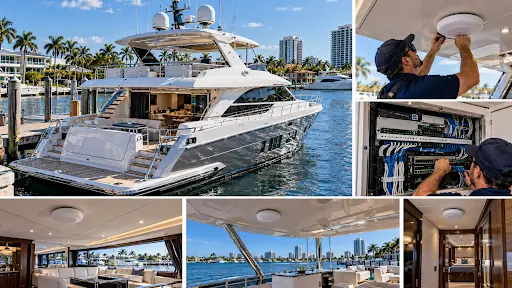
Access-point placement is one of the most important parts of choosing a yacht WiFi system.
Simply installing a high-powered access point does not necessarily create better coverage. Wireless signals can be affected by decks, bulkheads, furniture, metal structures, glass, and the location of other equipment.
A professional design considers:
- Number of decks
- Interior and exterior spaces
- Guest cabin layout
- Crew areas
- Bridge and operational spaces
- Engine and technical areas
- Outdoor entertainment areas
- Equipment-room requirements
- Expected number of simultaneous devices
The objective is consistent coverage rather than simply maximizing signal strength in a few locations.
For larger yachts, multiple access points can be strategically distributed across the vessel and coordinated as part of the wider network architecture.
Designing for Exterior Decks
Outdoor areas can create additional challenges because guests may expect the same connectivity on the aft deck, flybridge, beach club, or other entertainment areas that they experience inside the yacht.
The system therefore needs to account for both coverage and environmental conditions when selecting equipment and placement.
VLANs Keep Yacht Networks Organized
A professional yacht WiFi system should not treat every connected device as belonging to one large network.
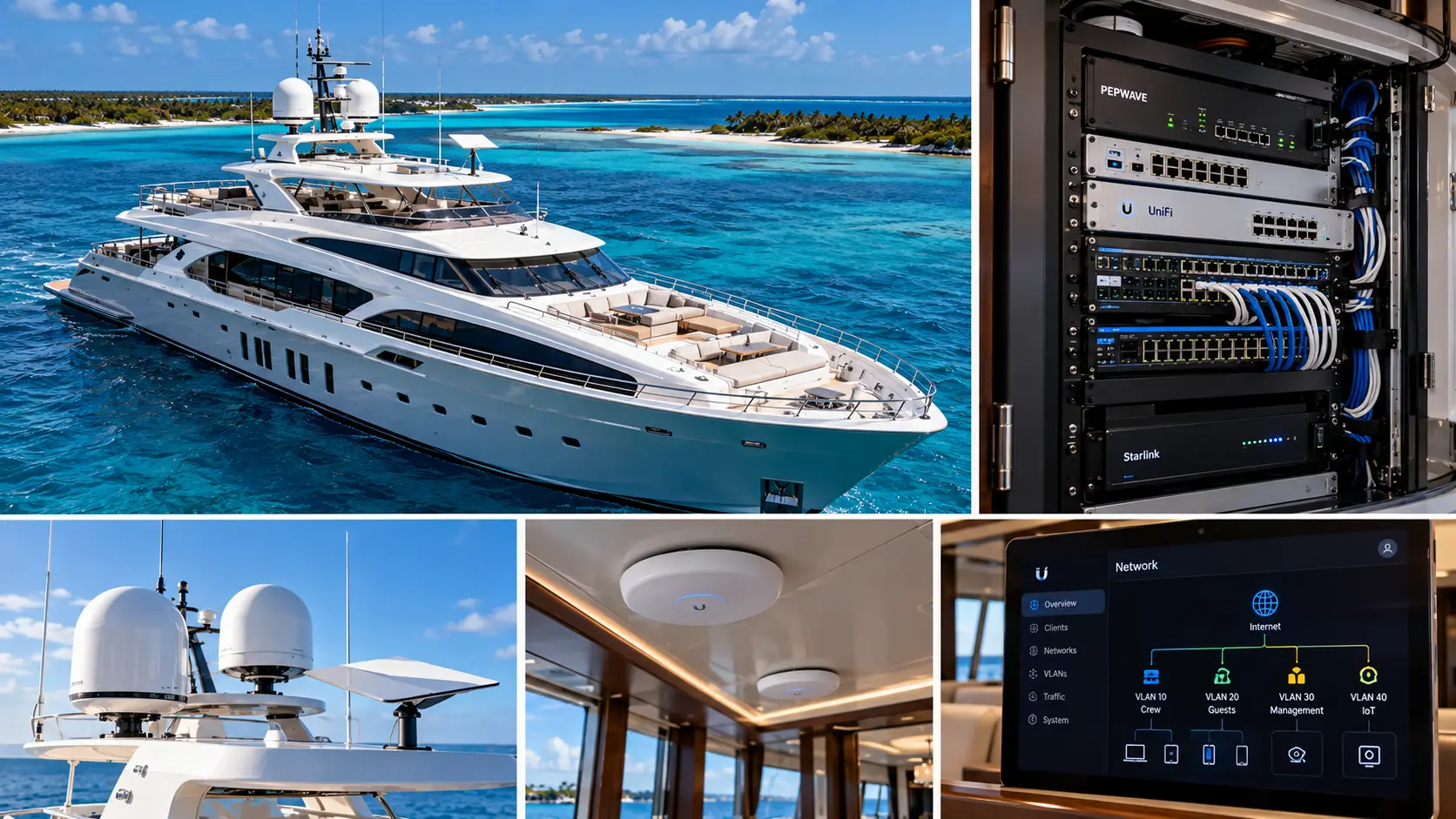
VLANs, or virtual local area networks, can separate traffic according to its purpose.
A yacht might use separate network segments for:
- Guests
- Crew
- Administrative systems
- AV and entertainment
- Security systems
- Operational technology
- Network management
- IoT devices
This segmentation helps reduce unnecessary exposure between systems and makes it easier to manage access.
For example, a charter guest connecting a personal phone to the guest WiFi should not automatically have access to crew systems, network-management interfaces, or operational equipment.
VLAN architecture can therefore be an important part of both network organization and security planning.
Choose Internet Sources Before Finalizing the WiFi Architecture
One of the most common mistakes is treating the WiFi network and the yacht’s internet connection as the same thing.
They are separate layers.
The WiFi system provides wireless connectivity around the yacht. WAN infrastructure connects that network to available internet sources.
Depending on the vessel and cruising profile, the network may need to work with multiple sources.
Satellite Internet
Satellite connectivity can provide internet access when cellular and shore-based services are unavailable.
However, satellite options can differ in coverage, performance, service plans, equipment requirements, and operating conditions.
Cellular Connectivity
5G and other cellular services can provide strong connectivity when the yacht is within coverage.
A professionally designed system may integrate cellular connections with other WAN sources to improve availability as the vessel moves between locations.
Marina and Shore-Based Internet
When a yacht is in a marina with a suitable shore connection, that service may provide another potential internet source.
The network can be designed to manage the transition between available connections according to the vessel’s configuration and requirements.
WAN Failover
For yachts where connectivity is operationally important, having more than one internet source can provide additional resilience.
The network can be designed to determine how and when traffic moves between available connections.
This is particularly important when a vessel transitions between port, coastal, and offshore environments.
Bandwidth Management Matters as Much as Raw Speed
A yacht can have a fast internet connection and still deliver a poor user experience if bandwidth is not managed effectively.
Imagine a charter yacht with 20 guests, 15 crew members, multiple streaming devices, security cameras, AV systems, and operational equipment all using the network simultaneously.
Without appropriate traffic policies, a small number of high-bandwidth activities can affect everyone else.
A professional network can use traffic management and prioritization strategies to help ensure important services continue to receive appropriate access to available bandwidth.
This becomes particularly relevant when the vessel is using a connection with limited or variable capacity.
Designing Around a Real Yacht Example
Consider a 116-foot charter yacht operating regularly between Fort Lauderdale and Nassau.
The yacht may have guest cabins requiring reliable streaming, outdoor entertainment areas where guests expect WiFi, crew spaces requiring separate connectivity, and operational systems that should remain isolated from guest traffic.
Its network design could therefore require strategically positioned access points, separate guest and crew VLANs, appropriate bandwidth policies, and integration with multiple available internet sources.
Now compare that with a 55-meter private yacht that spends several months in the Mediterranean before crossing to the Caribbean.
The second yacht may have a different cabin arrangement, different cruising routes, different satellite requirements, and different expectations for network availability during offshore passages.
The equipment cannot be selected intelligently without understanding the vessel’s actual operating profile.
Choosing Yacht WiFi Equipment
When evaluating yacht WiFi equipment, consider the complete network rather than individual products.
Important considerations include:
- Wireless standards and performance
- Access-point density
- Network switching
- PoE requirements
- Router and firewall capabilities
- VLAN support
- WAN management
- Cellular integration
- Satellite integration
- Remote management
- Environmental requirements
- Network expansion
- Service and support
The correct architecture will depend on the vessel, existing infrastructure, available communications systems, and project objectives.
For a professionally managed yacht, equipment selection should follow the network design rather than determine it.

How Marine Data Solutions Works With Your Yacht
A professional yacht WiFi project should begin with the vessel and its operating requirements, not with a shopping list of hardware.
1. Vessel and Route Review
Marine Data Solutions starts by understanding the yacht, its size, onboard systems, cruising regions, typical routes, and mission.
The team can review the current network architecture, internet sources, coverage requirements, and upcoming refit or yard window.
2. Network Design and Engineering
The requirements are translated into a network architecture that addresses access points, VLANs, switching, WAN connections, segmentation, and bandwidth management.
Where appropriate, drawings and documentation can help define the installation before work begins.
3. Yard or Dockside Installation
During the project window, the system can be installed and integrated with the vessel’s existing electronics, communications, AV, and network infrastructure.
4. Testing and Crew Handover
The completed system should be tested across relevant areas of the vessel and under appropriate operating conditions.
Documentation and crew handover help ensure the team onboard understands the network and its basic operating procedures.
5. Ongoing Support
A yacht network is not necessarily finished when installation ends. Changes in cruising patterns, internet services, onboard technology, and crew requirements can create new demands.
Ongoing technical support can help keep the system aligned with the vessel’s needs.
What a Professional Yacht WiFi Review Should Evaluate
A vessel-specific review should look beyond the access points.
Key areas can include:
- Existing network topology
- WiFi coverage
- Access-point locations
- VLAN structure
- Internet sources
- WAN failover
- Bandwidth requirements
- Guest and crew segmentation
- Network equipment
- AV and entertainment connectivity
- Operational systems
- Future expansion
- Existing cabling and infrastructure
- Upcoming yard or refit schedule
This approach helps identify whether the current system needs an equipment replacement, architectural redesign, additional coverage, better segmentation, or a combination of improvements.
Request a Vessel Communications Review
If you manage a 70–200+ ft yacht and are planning a WiFi upgrade, refit, new build, or network modernization, a vessel-specific review can help establish what the system should accomplish before equipment is selected.
Tell the Marine Data Solutions team your vessel length, cruising region, role, mission, current connectivity setup, and desired work window.
The team can use that information to determine whether the project is a fit and what should be reviewed first.
What Happens Next
- Submit your vessel and project information.
- The Marine Data Solutions team reviews the initial requirements.
- A planning conversation is scheduled to discuss the yacht and project.
- The team identifies the appropriate next steps for design, equipment, installation, or support.
Planning a Smaller-Boat or DIY WiFi Installation
Not every vessel requires a professionally engineered 70–200+ ft yacht network.
If you operate a smaller boat or are specifically looking for equipment for a DIY installation, explore the available equipment options through the Marine Data Solutions shop.
For larger vessels, complex refits, or professionally managed yachts, a vessel review can help determine the appropriate architecture before equipment is purchased.
Request a Vessel Communications Review
For a 70–200+ ft yacht, the right WiFi system starts with the vessel, not a product catalog.
If you are preparing for a refit, new build, yard period, or network upgrade, provide the vessel’s size, cruising region, mission, current connectivity environment, and desired work window.
Marine Data Solutions can review the requirements and discuss the appropriate next step for your yacht.
Frequently Asked Questions About Choosing a Yacht WiFi System
What should I consider when choosing a yacht WiFi system?
Start with the vessel’s size, layout, cruising region, mission, number of users, onboard systems, coverage requirements, and available internet sources. Equipment should be selected after these requirements are understood.
How many WiFi access points does a yacht need?
There is no universal number. Access-point requirements depend on the vessel’s size, deck arrangement, construction materials, cabin layout, exterior spaces, expected device density, and coverage objectives. A site-specific design can determine appropriate placement and quantity.
Why are VLANs important on a yacht?
VLANs allow different categories of users and systems to be separated within the network. Guest devices, crew systems, AV equipment, operational technology, and network management can be organized into separate network segments according to the vessel’s requirements.
Does better WiFi equipment guarantee faster yacht internet?
No. WiFi equipment affects the onboard wireless network, while internet performance also depends on the available WAN connection. Satellite, cellular, marina, and other internet sources can each have different performance and availability characteristics.
Can a yacht use multiple internet sources?
Yes. A professionally designed network can integrate multiple WAN sources depending on the vessel’s equipment and service configuration. Multiple connections can also provide additional connectivity options when the yacht moves between marina, coastal, and offshore environments.
When should a yacht WiFi system be professionally designed?
Professional design can be particularly useful for larger yachts, complex refits, new builds, charter vessels, multi-WAN environments, or networks supporting significant AV and operational infrastructure. The design can address coverage, segmentation, bandwidth, integration, and future expansion before installation begins.
Request a Vessel Communications Review
Complete the form below to schedule a 20–30 minute consultation with a Marine Data Solutions yacht internet and network specialist.