
- Running a smaller boat or planning a DIY installation?
- Upgrade Your Yacht’s Internet
- Why Yacht Internet Is Different From Shore-Based Broadband
- Starlink for Yacht Internet
- 5G and Cellular Internet for Yachts
- Marina and Shore-Based Internet
- What Multi-WAN Means for Yacht Internet
- High Speed Does Not Always Mean Reliable Internet
- Bandwidth Management for Guests and Crew
- A Real-World Yacht Connectivity Scenario
- Choosing the Right Yacht Internet Architecture
- How Marine Data Solutions Works With Your Yacht
- What a Yacht Internet Review Should Evaluate
- Request a Yacht Internet Vessel Review
- What Happens Next
- Planning a Smaller-Boat or DIY Internet Installation
- Request a Yacht Internet Vessel Review
- Frequently Asked Questions About High-Speed Yacht Internet
- Request a Yacht Internet Vessel Review
- Related Articles:
This guide is for professionally managed 70–200+ ft private and charter yachts with full-time captains, engineers/ETOs, yacht managers, or owner representatives.
If you run a smaller boat or plan a DIY install, start with equipment options in the Marine Data Solutions shop.
For a 70–200+ ft yacht, high speed internet for yachts is about more than finding the fastest available connection.
A professionally managed yacht may move between marinas, coastal areas, offshore passages, and international cruising regions, with different internet sources available at each stage. Starlink may provide high-bandwidth connectivity offshore, 5G can deliver strong performance in coastal areas, and marina or shore-based internet may be useful when the vessel is docked.
The challenge is bringing these connections together into a network that guests, crew, and onboard systems can actually use reliably.
A 116-foot charter yacht operating between Fort Lauderdale and Nassau, for example, may need high bandwidth for guest streaming while maintaining separate connectivity for crew and operational systems. A larger private yacht crossing from the Mediterranean to the Caribbean may have very different requirements for satellite connectivity, cellular service, failover, and bandwidth management.
This guide explains how Starlink, 5G, shore-based internet, and multi-WAN networking can work together to provide fast yacht internet across different operating environments.
If you are planning a refit, new build, or connectivity upgrade, a vessel-specific review can help determine which combination of internet sources and network architecture fits the yacht.
Running a smaller boat or planning a DIY installation?
Start with equipment options at marinedatasolutions.com/shop/
Marine Data Solutions has delivered complex yacht and commercial vessel internet and communications installations on professionally managed 70–200+ ft yachts since 2016+.
Our team is based in Fort Lauderdale and supports vessels operating across the United States, Bahamas, Caribbean, and Mediterranean.
Upgrade Your Yacht’s Internet
If your current internet becomes unreliable as your yacht moves between the marina, coastal waters, and offshore routes, it may be time to review the entire connectivity architecture rather than replace a single connection.
Tell us your vessel size, cruising regions, current internet sources, and upcoming yard window. Our team can review your requirements and help identify the right path for Starlink, 5G, shore-based connectivity, multi-WAN routing, and onboard network integration.
Why Yacht Internet Is Different From Shore-Based Broadband
A house or office typically has a fixed internet connection.
A yacht does not.
The vessel may be:
- Docked in a marina
- Cruising along a coastline
- Operating between islands
- Traveling offshore
- Crossing international waters
- Moving between different cellular coverage areas
The best available internet source can therefore change throughout the day.
This makes yacht internet a combination of connectivity sources, network infrastructure, bandwidth management, and operational planning.
The goal is not necessarily to use one connection everywhere. Instead, the network can be designed to make appropriate use of the connections available to the yacht.
Starlink for Yacht Internet
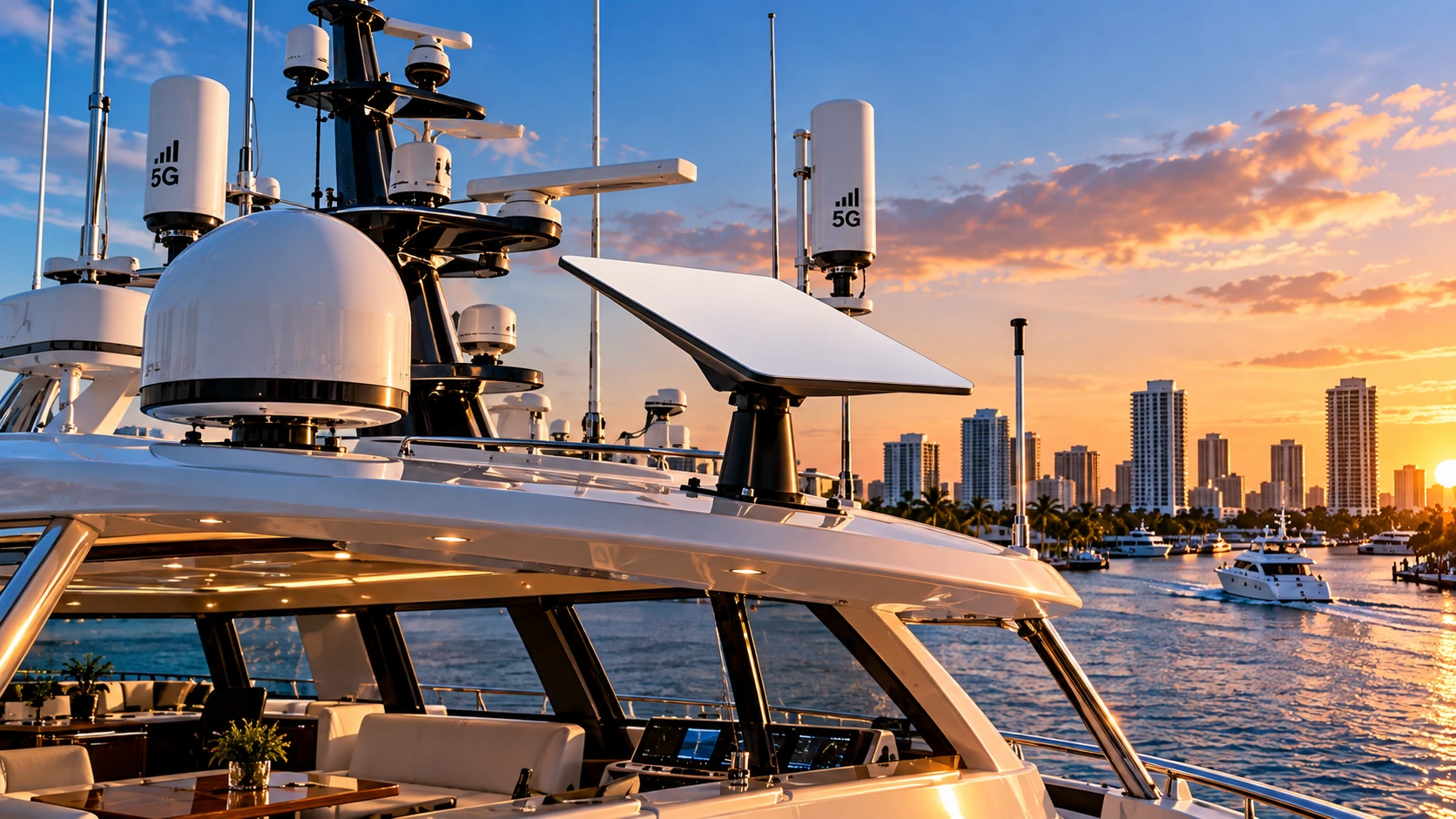
Starlink has changed the expectations around broadband connectivity at sea by providing a high-bandwidth satellite option for many vessels.
For yachts, it can provide significant capacity when operating within the service’s applicable coverage and according to the selected service plan.
However, Starlink should not automatically be viewed as the entire yacht internet solution.
A professionally engineered network still needs to consider:
- Antenna placement
- Equipment location
- Power requirements
- Network integration
- Service-plan requirements
- Coverage and operating regions
- Backup connectivity
- Traffic management
- Failover behavior
For a yacht that depends heavily on connectivity, Starlink can be one component of a broader communications architecture.
5G and Cellular Internet for Yachts
5G can be particularly useful when a yacht is operating within cellular coverage.
Depending on location, carrier, equipment, and service plan, cellular connectivity can provide fast internet without relying exclusively on satellite communications.
This makes 5G useful for coastal cruising and areas where reliable cellular coverage is available.
A yacht may therefore use cellular connectivity when it provides a practical high-speed connection and transition to satellite connectivity when the vessel moves beyond cellular coverage.
Professional marine networking equipment can help integrate cellular connections into the wider WAN architecture.
Marina and Shore-Based Internet
When a yacht is docked, marina or shore-based internet may be another available connection.
Depending on the marina and infrastructure, shore-based service can potentially provide high bandwidth without using satellite or cellular capacity.
However, marina networks can vary significantly in quality, configuration, reliability, and available bandwidth.
The yacht’s network should therefore be designed to treat shore-based internet as one possible connection rather than assuming it will always provide a consistent experience.
What Multi-WAN Means for Yacht Internet
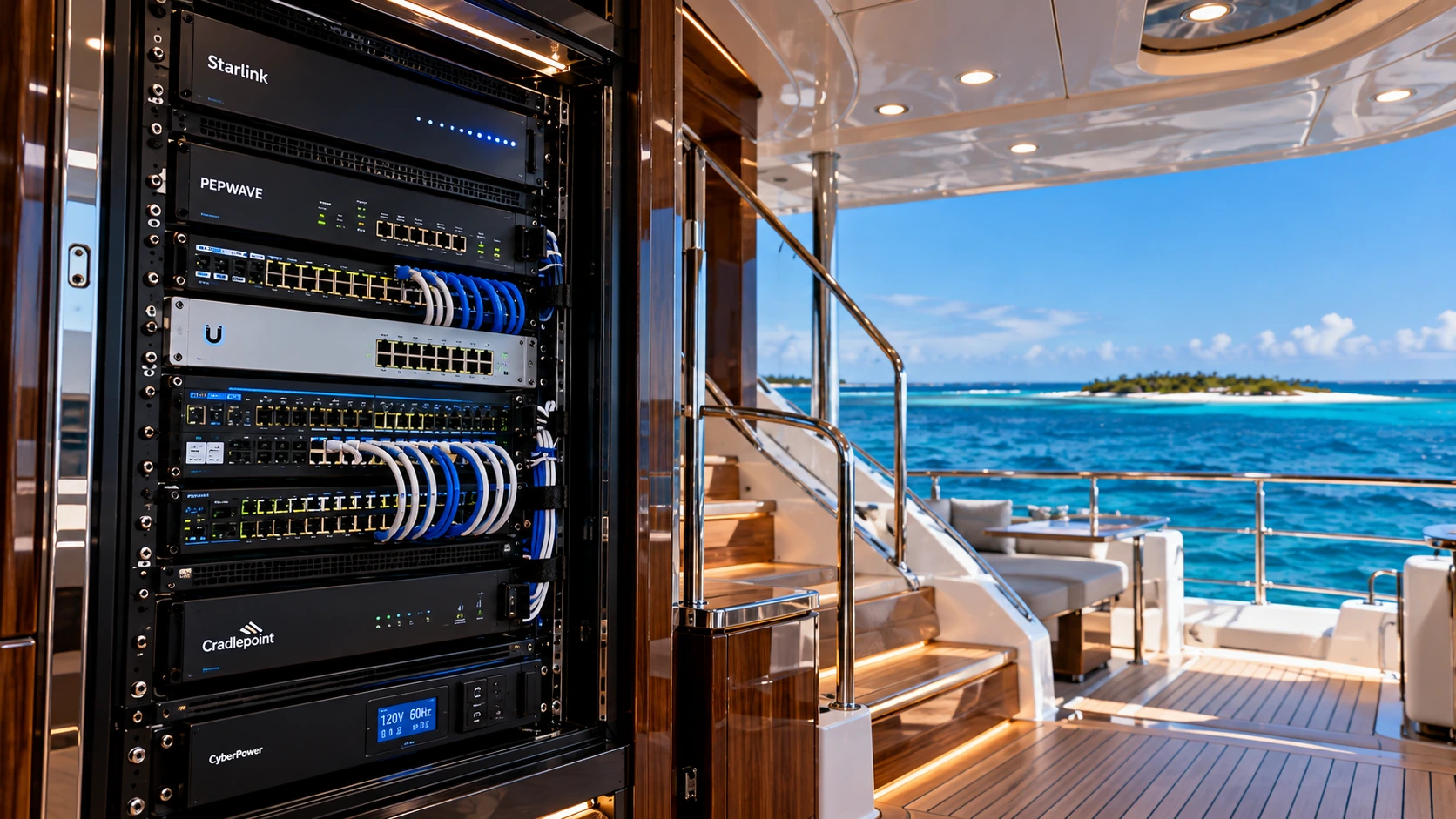
Multi-WAN refers to a network architecture that can use multiple wide-area network connections.
For a yacht, those connections might include:
- Starlink
- 5G or other cellular services
- Marina Ethernet
- Other satellite services
- Secondary broadband connections
Instead of manually changing connections every time the yacht moves, the network can be configured to manage multiple WAN sources according to defined policies.
Depending on the architecture, this can support:
- Automatic failover
- Connection prioritization
- Traffic distribution
- Application-specific routing
- Bandwidth management
- More resilient connectivity
The exact configuration depends on the yacht’s requirements and available services.
High Speed Does Not Always Mean Reliable Internet
One of the most important distinctions for yacht owners and captains is the difference between speed and availability.

A connection may deliver very high speeds under ideal conditions but still become unavailable when the yacht moves outside its coverage area.
Conversely, a lower-speed connection may remain valuable as a backup.
For this reason, yacht connectivity should be evaluated based on more than a speed-test result.
Consider:
- Where the yacht operates
- How often it leaves cellular coverage
- How important internet availability is
- How many users connect simultaneously
- Which onboard systems depend on connectivity
- What backup connections are available
- How the network handles failures
The objective is to create a connectivity architecture that matches the yacht’s operating profile.
Bandwidth Management for Guests and Crew
High-speed internet becomes more complicated when dozens of devices are connected simultaneously.
A charter yacht might have guests streaming multiple 4K videos, using video calls, browsing social media, and connecting phones, tablets, and laptops.
At the same time, crew may need connectivity for:
- Communications
- Weather services
- Vessel management
- Maintenance systems
- Administrative work
- Remote support
Operational systems may also require network access.
Without appropriate network policies, a few high-bandwidth activities can consume capacity that other users need.
A professionally designed yacht network can use traffic policies, VLANs, quality-of-service strategies, and bandwidth controls to help manage these competing requirements.
A Real-World Yacht Connectivity Scenario
Consider a 116-foot charter yacht operating weekly between Fort Lauderdale and Nassau.
While near Fort Lauderdale, the yacht may have access to marina internet and strong cellular service. During the crossing, cellular coverage can become less useful, making satellite connectivity more important.
The network could therefore be designed around multiple WAN sources, with appropriate policies for switching or routing traffic as conditions change.
Guest streaming and general internet traffic can be managed separately from crew and operational systems, helping the vessel maintain an organized network even when demand increases during a charter.
Now consider a 55-meter private yacht spending extended periods in the Mediterranean before crossing to the Caribbean.
Its network may need to accommodate longer offshore passages, different cellular environments, satellite connectivity, and different bandwidth requirements.
The correct architecture depends on the vessel’s routes and mission—not simply the advertised speed of a single internet product.
Choosing the Right Yacht Internet Architecture
Before selecting equipment or service plans, consider the entire connectivity environment.
Vessel Size and Layout
Larger yachts generally have more cabins, decks, systems, and users. The network must support the physical size and complexity of the vessel.
Cruising Region
Connectivity options vary by geography. A yacht operating primarily along the U.S. East Coast may have different options from one spending months offshore or cruising internationally.
Mission
A private yacht, charter yacht, and yacht used for business onboard can have different bandwidth and reliability requirements.
User Density
The number of simultaneous users and devices can dramatically affect network performance.
Critical Systems
Determine which systems need connectivity and whether they require priority or isolation from guest traffic.
Future Requirements
A network should account for future increases in connected devices, new internet services, AV upgrades, and changes to the yacht’s operating profile.
How Marine Data Solutions Works With Your Yacht
A high-speed yacht internet project should start with the vessel and its operating requirements rather than a single internet product.
1. Vessel and Route Review
Marine Data Solutions starts by understanding the yacht, its size, onboard systems, cruising regions, typical routes, and mission.
The team reviews current internet sources, network infrastructure, coverage requirements, and upcoming yard or refit windows.
2. Connectivity Architecture
The available WAN sources are evaluated alongside the onboard network.
This can include Starlink, cellular services, marina connectivity, and other available internet sources.
3. Network Design
The network architecture is designed around the vessel’s requirements, including routing, failover, segmentation, bandwidth management, and integration with existing systems.
4. Installation and Integration
During the appropriate yard or dockside window, the required network and communications equipment can be installed and integrated with the vessel’s existing infrastructure.
5. Testing, Handover and Ongoing Support
The completed system is tested across relevant areas and operating scenarios.
Documentation and crew handover help the onboard team understand the network and its basic operating procedures.
Ongoing technical support can help the network adapt as the vessel changes routes, adds new services, or upgrades onboard systems.
What a Yacht Internet Review Should Evaluate
A professional vessel review should look at the complete connectivity environment.
Areas to evaluate can include:
- Current internet sources
- Starlink configuration
- Cellular and 5G options
- Marina connectivity
- WAN routing
- Failover
- Bandwidth requirements
- Network segmentation
- Guest and crew requirements
- Existing network equipment
- WiFi coverage
- Critical onboard systems
- Future expansion
- Cruising routes
- Upcoming yard periods
This helps determine whether the yacht needs additional connectivity sources, a network redesign, new equipment, improved failover, or a combination of these improvements.
Request a Yacht Internet Vessel Review
If you manage a 70–200+ ft yacht and need faster, more resilient internet for charter operations, private cruising, business use onboard, or a planned refit, a vessel-specific review can help establish the right architecture.
Tell the Marine Data Solutions team your vessel length, cruising region, role, mission, current internet sources, and desired work window.
The team can review the initial requirements and discuss the appropriate next step.
What Happens Next
- Submit your vessel and project information.
- The Marine Data Solutions team reviews the requirements.
- A planning conversation is scheduled.
- The team identifies the appropriate next steps for design, equipment, installation, or support.
Planning a Smaller-Boat or DIY Internet Installation
Not every vessel needs a professionally engineered multi-WAN architecture.
If you operate a smaller boat or are specifically looking for equipment for a DIY installation, explore the available options through the Marine Data Solutions shop.
For larger vessels, complex connectivity projects, charter operations, or professionally managed yachts, a vessel review can help determine the appropriate architecture before equipment and service plans are selected.
Request a Yacht Internet Vessel Review
For a 70–200+ ft yacht, high-speed internet is not simply about purchasing the fastest available connection.
The right solution considers Starlink, 5G, shore-based connectivity, multi-WAN architecture, network segmentation, bandwidth management, vessel layout, and cruising routes as parts of one system.
If you are planning a refit, new build, yard period, or connectivity upgrade, provide your vessel size, cruising region, mission, current internet environment, and desired work window.
Frequently Asked Questions About High-Speed Yacht Internet
What is the best way to get high-speed internet on a yacht?
The appropriate solution depends on the yacht’s size, cruising regions, mission, and available services. A combination of satellite, 5G/cellular, marina connectivity, and multi-WAN networking may be appropriate for vessels that operate across different environments.
Can Starlink provide high-speed internet on a yacht?
Starlink can provide high-bandwidth satellite connectivity for compatible vessels and service configurations. Its suitability depends on the yacht’s operating areas, service plan, equipment, and network requirements.
Can a yacht use Starlink and 5G at the same time?
A yacht network can be designed to integrate multiple WAN connections, which may include Starlink and cellular services. The network architecture determines how those connections are prioritized, routed, or used for failover.
What is multi-WAN for a yacht?
Multi-WAN is a network architecture that allows a yacht to integrate multiple internet connections. Depending on the design, it can support failover, connection prioritization, traffic distribution, and other routing policies.
Does a faster internet connection mean better yacht WiFi?
Not necessarily. Internet speed and onboard WiFi are separate parts of the system. A yacht can have a high-speed WAN connection but still experience poor WiFi because of access-point placement, network configuration, congestion, or insufficient coverage.
When should a yacht use multiple internet sources?
Multiple internet sources can be useful when a vessel operates across areas with changing connectivity conditions or when internet availability is important to guests, crew, business operations, or onboard systems. A vessel-specific review can help determine whether multiple connections are appropriate.
Request a Yacht Internet Vessel Review
Complete the form below to schedule a 20–30 minute consultation with a Marine Data Solutions yacht internet and network specialist.